PRP Therapy Success Rate — What the Research Shows
One of the most common questions patients ask before committing to platelet-rich plasma therapy is straightforward: does it actually work? It’s a fair question, and it deserves a thorough, evidence-based answer. The clinical research on PRP has expanded significantly over the past decade, and the data now provides a much clearer picture of what patients can realistically expect. Across multiple conditions and study populations, 70–90% of patients report significant improvement following PRP treatment — but the specifics vary depending on the condition being treated, the severity of the injury, and a number of other factors. Here is what the research actually shows.
How Success Is Measured in PRP Studies
Before examining the numbers, it’s important to understand how researchers define “success” in PRP clinical trials. Unlike a simple pass-or-fail test, treatment outcomes in regenerative medicine are measured across several dimensions. The most commonly used tools include the Visual Analogue Scale (VAS), which asks patients to rate their pain on a 0–10 scale, and functional outcome scores such as the Western Ontario and McMaster Universities Osteoarthritis Index (WOMAC) for knee conditions, the Disabilities of the Arm, Shoulder and Hand (DASH) questionnaire, and the American Orthopaedic Foot & Ankle Society (AOFAS) score.
Researchers typically define a “successful” outcome as a clinically meaningful reduction in pain (usually 50% or greater improvement on the VAS) combined with measurable gains in functional capacity. Some studies also incorporate imaging assessments — such as MRI or ultrasound — to evaluate structural changes in the treated tissue. Patient-reported satisfaction is another important metric, reflecting not just clinical measurements but the patient’s subjective experience of improvement in daily life.
PRP Success Rates by Condition
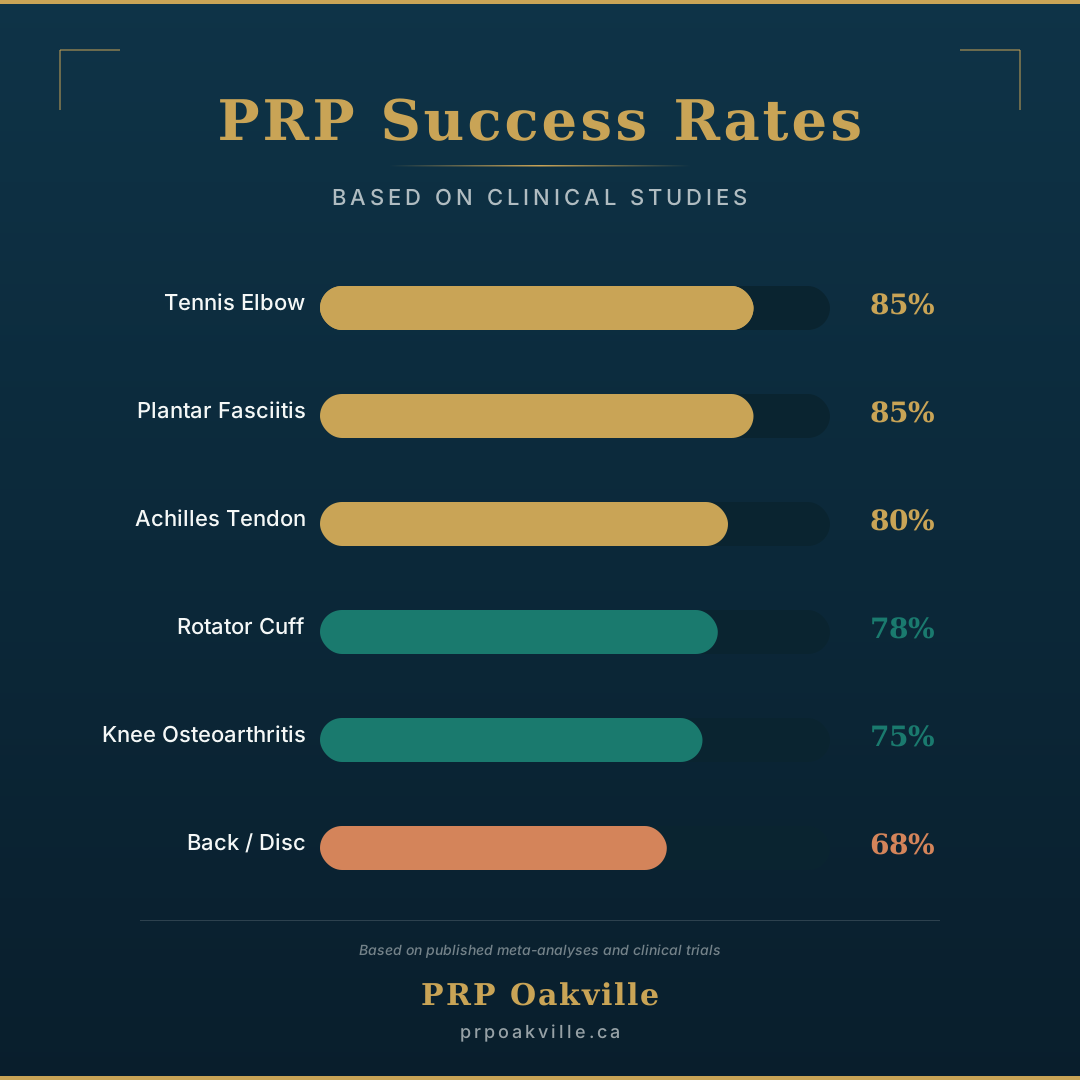
The effectiveness of PRP therapy is not uniform across all conditions. Some respond exceptionally well, while others show more modest improvement. The following breakdown reflects the current consensus from published meta-analyses, systematic reviews, and randomized controlled trials.
Knee Osteoarthritis: 70–80% Improvement
Knee osteoarthritis is one of the most extensively studied conditions for PRP therapy, and the results have been consistently encouraging. Multiple meta-analyses — including those published in the American Journal of Sports Medicine and the Journal of Orthopaedic Research — have demonstrated that 70–80% of patients with mild to moderate knee osteoarthritis experience clinically significant improvements in both pain and function following PRP injections.
These improvements typically become noticeable within four to six weeks after treatment and can last from six months to over a year. Importantly, PRP has consistently outperformed hyaluronic acid injections and corticosteroids in head-to-head comparisons for sustained pain relief. Patients with earlier-stage osteoarthritis (Kellgren–Lawrence grades I–III) tend to respond best, while those with severe end-stage degeneration (grade IV) show more limited benefit.
Tennis Elbow (Lateral Epicondylitis): 80–90% Success
Tennis elbow is one of the highest-responding conditions to PRP therapy. Chronic lateral epicondylitis that has failed to improve with rest, bracing, and physical therapy responds remarkably well to platelet-rich plasma injections. Randomized controlled trials have consistently reported success rates in the range of 80–90%, with patients experiencing substantial reductions in pain and restoration of grip strength.
A landmark study published in the American Journal of Sports Medicine found that PRP-treated patients demonstrated significantly greater long-term improvement compared to those who received corticosteroid injections. While cortisone provided faster initial relief, the PRP group achieved superior outcomes at six months, one year, and two years post-treatment — underscoring PRP’s ability to promote actual tissue repair rather than simply masking pain.
Rotator Cuff Tears: 70–85% Improvement
Rotator cuff injuries — particularly partial-thickness tears and chronic tendinopathy — respond well to PRP therapy. Systematic reviews have reported improvement rates of 70–85% in patients treated with PRP, with significant reductions in shoulder pain and meaningful gains in range of motion and functional capacity. The growth factors delivered by PRP stimulate collagen production and neovascularisation in the damaged tendon tissue, supporting the body’s natural healing process.
For patients facing the prospect of rotator cuff surgery — which typically requires four to six months of rehabilitation — PRP offers a less invasive option that can often provide sufficient improvement to avoid or delay surgical intervention. Studies have also demonstrated promising results when PRP is used as an adjunct to arthroscopic rotator cuff repair, potentially improving healing rates and reducing re-tear incidence.
Achilles Tendinopathy: 75–85% Success
Chronic Achilles tendinopathy is another condition where PRP has shown strong clinical results. The Achilles tendon has notoriously poor blood supply, which is why injuries to this structure are often slow to heal and prone to becoming chronic. PRP addresses this challenge directly by delivering concentrated growth factors to the injured tissue, stimulating collagen synthesis and promoting the formation of new blood vessels.
Clinical studies report success rates of 75–85% for PRP treatment of chronic Achilles tendinopathy, with patients experiencing significant reductions in pain and improved ability to return to physical activity. These results are particularly notable for patients who have failed to respond to eccentric loading exercises, which are considered the first-line conservative treatment for this condition.
Plantar Fasciitis: 80–90% Improvement
Plantar fasciitis is one of the conditions where PRP therapy delivers some of its most impressive results. Multiple randomized controlled trials have demonstrated success rates of 80–90%, with patients reporting substantial relief from the chronic heel pain that characterizes this condition. PRP injections target the underlying tissue damage in the plantar fascia, promoting genuine structural repair rather than simply suppressing inflammation.
Comparative studies have shown that PRP provides superior long-term outcomes compared to corticosteroid injections for plantar fasciitis. While cortisone may offer faster initial pain relief, its benefits tend to diminish within a few months. PRP, by contrast, typically delivers progressive improvement that peaks at three to six months and can be sustained well beyond a year.
Back and Disc Conditions: 60–75% Improvement
PRP therapy for spinal conditions — including degenerative disc disease, facet joint arthropathy, and sacroiliac joint dysfunction — is a more recent area of investigation. Early clinical data is promising, with reported improvement rates of 60–75%, but this category currently has less robust evidence than the conditions listed above.
The complexity of spinal pain — which often involves multiple contributing structures and can be influenced by neural sensitisation, postural factors, and psychosocial variables — makes it a more challenging target for any single intervention. That said, intradiscal PRP injections for early degenerative disc disease and PRP injections for facet joint and sacroiliac joint pain have shown encouraging results in preliminary studies, and larger randomized controlled trials are currently underway.
Factors That Influence PRP Success Rates
While the overall numbers are encouraging, it’s important to understand that PRP is not a one-size-fits-all treatment. Several key factors can significantly influence the likelihood of a successful outcome:
- Severity of the condition. Patients with mild to moderate injuries and early-to-mid-stage degenerative changes tend to respond best to PRP. Severe, end-stage conditions with extensive structural damage are less likely to achieve significant improvement.
- Patient age and overall health. Younger, healthier patients generally produce higher-quality platelets with more potent growth factor concentrations. While PRP can be effective across a wide age range, patients with compromised healing capacity due to age, diabetes, or other systemic conditions may see more modest results.
- Number of treatments. Many conditions respond best to a series of two to three PRP injections spaced several weeks apart. A single injection may provide some benefit, but optimal results often require a multi-session treatment protocol.
- Quality of PRP preparation. Not all PRP is created equal. The concentration of platelets, the volume of the preparation, and the specific composition of the final product all influence its therapeutic potency. Higher-quality preparation systems that achieve true platelet concentration (typically 4–7 times baseline levels) tend to produce better clinical outcomes.
- Physician expertise. The skill and experience of the treating physician matters significantly. Accurate injection placement — ideally guided by ultrasound or fluoroscopy — ensures that the PRP reaches the precise area of damage. Physicians with extensive experience in regenerative medicine also tend to achieve better results through optimised treatment protocols and patient selection.
Why Results Vary Between Clinics
Patients sometimes encounter inconsistent information about PRP success rates, and one of the primary reasons for this is the significant variation in how PRP is prepared and administered across different clinics. Understanding these differences can help you make a more informed choice about where to receive treatment.
The most important variable is the PRP preparation system itself. Double-spin centrifugation systems, which process the blood through two separate centrifugation cycles, generally produce higher platelet concentrations than single-spin systems. Higher platelet concentration translates to a greater delivery of growth factors to the treatment site, which can meaningfully impact outcomes.
Another important distinction is between leukocyte-rich PRP (LR-PRP) and leukocyte-poor PRP (LP-PRP). Leukocyte-rich preparations contain a higher concentration of white blood cells, which can be beneficial for certain tendon conditions where an initial inflammatory response is desirable. Leukocyte-poor preparations, which contain fewer white blood cells, are often preferred for intra-articular injections (such as for knee osteoarthritis) where minimising inflammation within the joint is important. Clinics that tailor their PRP formulation to the specific condition being treated tend to achieve better results.
Equipment quality, injection technique, the use of imaging guidance, and the physician’s overall experience with regenerative medicine protocols all contribute to the variability in outcomes between clinics. This is why choosing a provider with a strong track record in PRP therapy is one of the most important decisions a patient can make.
Patient Satisfaction and Recommendations
Beyond the clinical measurements and statistical outcomes, patient satisfaction provides a valuable real-world perspective on PRP effectiveness. Across multiple surveys and follow-up studies, patient satisfaction rates for PRP therapy are consistently high. More than 80% of patients who undergo PRP treatment report that they are satisfied with their results and would recommend the treatment to others.
This high satisfaction rate reflects several aspects of the PRP experience beyond just pain relief. Patients appreciate the minimal downtime, the avoidance of surgical risks, the use of their own biological material (eliminating concerns about foreign substances or allergic reactions), and the progressive, sustained nature of the improvement. Many patients also report a sense of empowerment in choosing a treatment that works with their body’s natural healing mechanisms rather than relying on synthetic medications or invasive procedures.
Limitations of Current Research
While the evidence supporting PRP therapy is substantial and growing, it is important to acknowledge the limitations of the current body of research. Many early PRP studies were small in sample size or lacked rigorous controls. The absence of a standardised PRP preparation protocol across studies makes it difficult to directly compare results, as different studies may use different platelet concentrations, injection volumes, and treatment schedules.
The field would benefit from larger, multi-centre randomized controlled trials with standardised PRP preparation methods and long-term follow-up periods. Such studies are currently underway, and the results will help refine treatment protocols and provide even more precise efficacy data for specific conditions and patient populations. In the meantime, the existing evidence is sufficiently robust to support PRP as a legitimate and effective treatment option for the conditions discussed above.
Is PRP Therapy Right for You?
The success rates outlined above are averages drawn from clinical studies involving diverse patient populations. Your individual outcome will depend on your specific condition, its severity, your overall health, and the quality of the treatment you receive. The most reliable way to determine whether PRP therapy is likely to benefit you is through a thorough consultation with a physician who specialises in regenerative medicine and can evaluate your condition, review your imaging, and provide an honest assessment of your expected outcome.
Ready to Explore PRP Therapy?
Book a consultation to find out if platelet-rich plasma treatment is the right option for your recovery.
Book a Consultation